Marketing for Auto Repair Shops, Tri-State and Beyond
Car count follows trust. Ryzoro gives independent shops a website that converts, reviews that stack up automatically, and follow-up that brings declined repairs back through the bay door.
Family-owned, veteran-owned · 10 years in business · Veterans save 10%
Marketing for auto repair shops comes down to one metric: car count. Drivers choose a mechanic on trust, and trust online is built from recent Google reviews, a professional website, and visibility in local search.
Ryzoro LLC builds that system for independent shops. The stack combines web design, local SEO, and content with AI-powered automation that asks for reviews and follows up on estimates without any staff time. The company is family-owned, veteran-owned, and 10 years in business, based in Laughlin, NV and serving the Tri-State area and beyond.
Auto repair has an advantage most trades lack: repeat customers on a maintenance cycle. That makes retention automation, like reminders on declined repairs, worth as much as new-customer visibility. The audit finds which lever moves car count first, whether that is rankings in Bullhead City, AZ, review volume, or follow-up.
Plans state their monthly hours of work up front, and veteran-owned shops save 10%. You own everything that gets built. No lock-in.
What's Included
Everything an Independent Shop Needs to Lift Car Count
Five service lines and a set of focused automations, working both sides of car count: new drivers in, existing customers back.
Web Design
A fast, mobile-first shop website listing services, hours, and booking, with the phone one tap away.
Local SEO
Map pack visibility and pages that rank for searches like auto repair Bullhead City AZ.
Content Writing
Service pages for brakes, diagnostics, AC, and more, matching how drivers actually search.
Social Media
Weekly Google Business Profile and Facebook posts that keep the shop visible without staff time.
Business Automation
Review requests, declined-repair reminders, and booking confirmations that run themselves.
Review Growth
An automatic Google review ask 24 hours after every pickup, while the fixed car still feels new.
The Process
How the Shop Growth System Gets Built
Four steps, each shipping something the business owns outright. Weeks, not quarters.
Free Growth Audit
A plain-language review of the website, rankings, review profile, and follow-up gaps, biggest leak first. Shop audits look hardest at the review pipeline and the declined-repair list, the two cheapest sources of car count.
Website Built or Fixed
Mobile-first pages listing services, hours, and a booking option, with the phone number one tap away. Drivers research before they call, and the site is where earned trust converts.
Local SEO That Compounds
Service and city pages targeting the searches that buy: brake repair, AC service, check engine diagnostics, each paired with the towns served. The Google Business Profile stays complete and active.
Automation Where It Pays
Review requests, declined-work reminders, or booking tools added one at a time against a measurable bottleneck. Retention automations usually pay first, because the customer list already exists.
Reviews on Autopilot
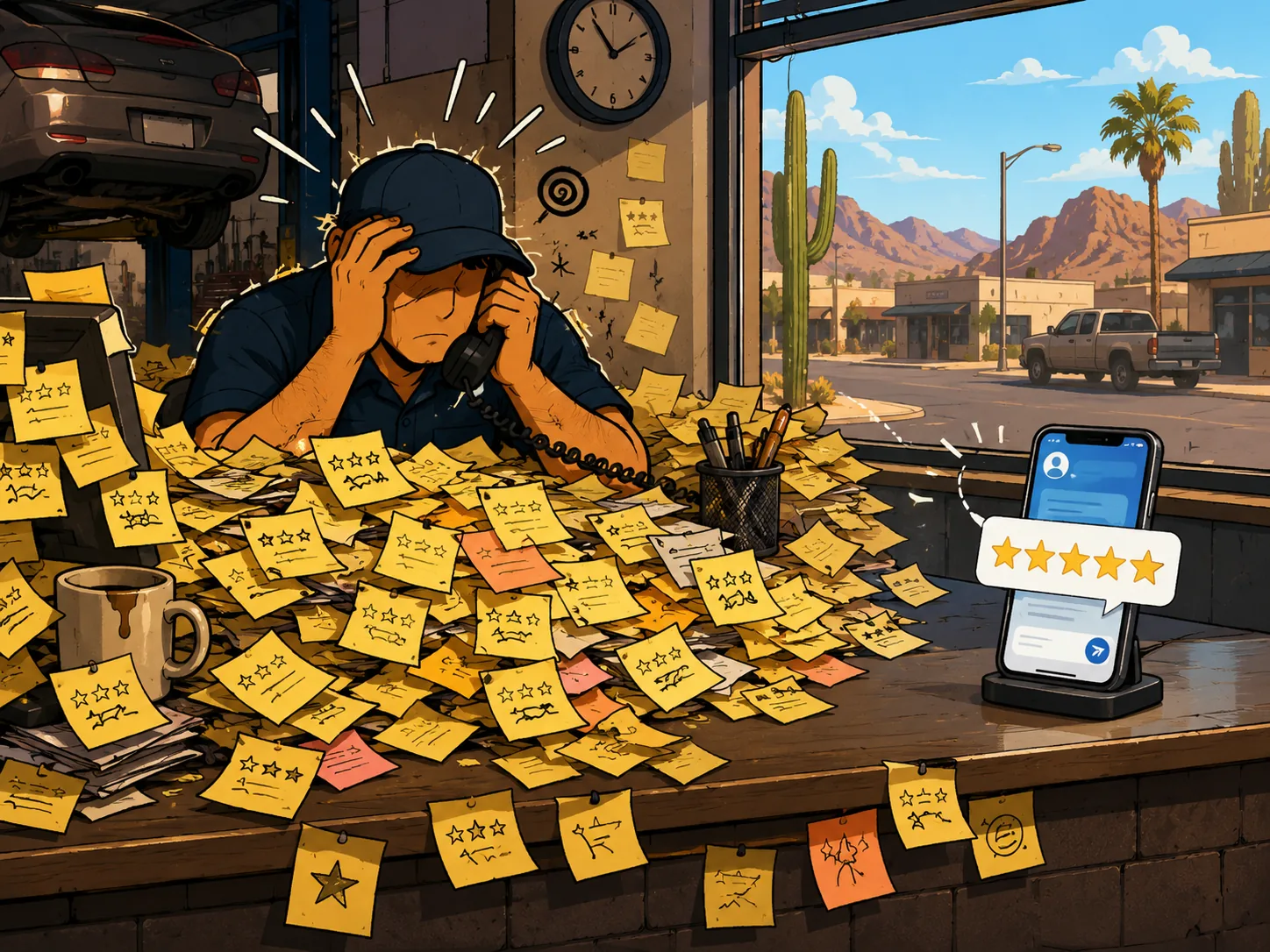
A shop can do excellent work for years and still show a thin Google profile, because nobody asks happy customers to say so. The next driver searching auto repair Fort Mohave AZ picks the shop with 80 recent reviews over the better mechanic with 9. Automated asking closes that gap without a service writer touching it.
- Review ask sent 24 hours after every pickup
- Timed for peak satisfaction, not busy-day memory
- Steady recent reviews lift map pack placement
- A review base the shop owns and keeps
Where Auto Shops Lose Car Count
Auto shops lose car count quietly, one unasked review and one forgotten estimate at a time. Declined work leaks most. Customers postpone brakes, batteries, and belts, then forget which shop quoted them. Phones go unanswered under cars. Slow seasons arrive with no campaign ready for past customers. Each leak has an automated fix:
- Automated lead follow-up. An immediate text on every missed call or form fill, a 24-hour email, and a 72-hour nudge.
- Estimate follow-up accelerator. Templated estimates with automatic PDF delivery, e-signature, and a built-in 48-hour follow-up.
- Post-service review requests. A Google review ask sent 24 hours after every pickup, while the fixed car still feels new.
- Seasonal and declined-work campaigns. Reminders to past customers on postponed repairs and season-driven services like pre-summer cooling checks.
- Scheduling and bay management. Self-service booking with automatic confirmations and reminders that cut no-shows.
- Google Business Profile and social automation. Weekly posts that keep both feeds active without pulling anyone off a repair.
Automation gets added only when a bottleneck justifies it, never bundled by default. Profile fundamentals come first, in line with Google's guidance that complete, active business profiles improve local visibility.
Declined Repairs, Recovered
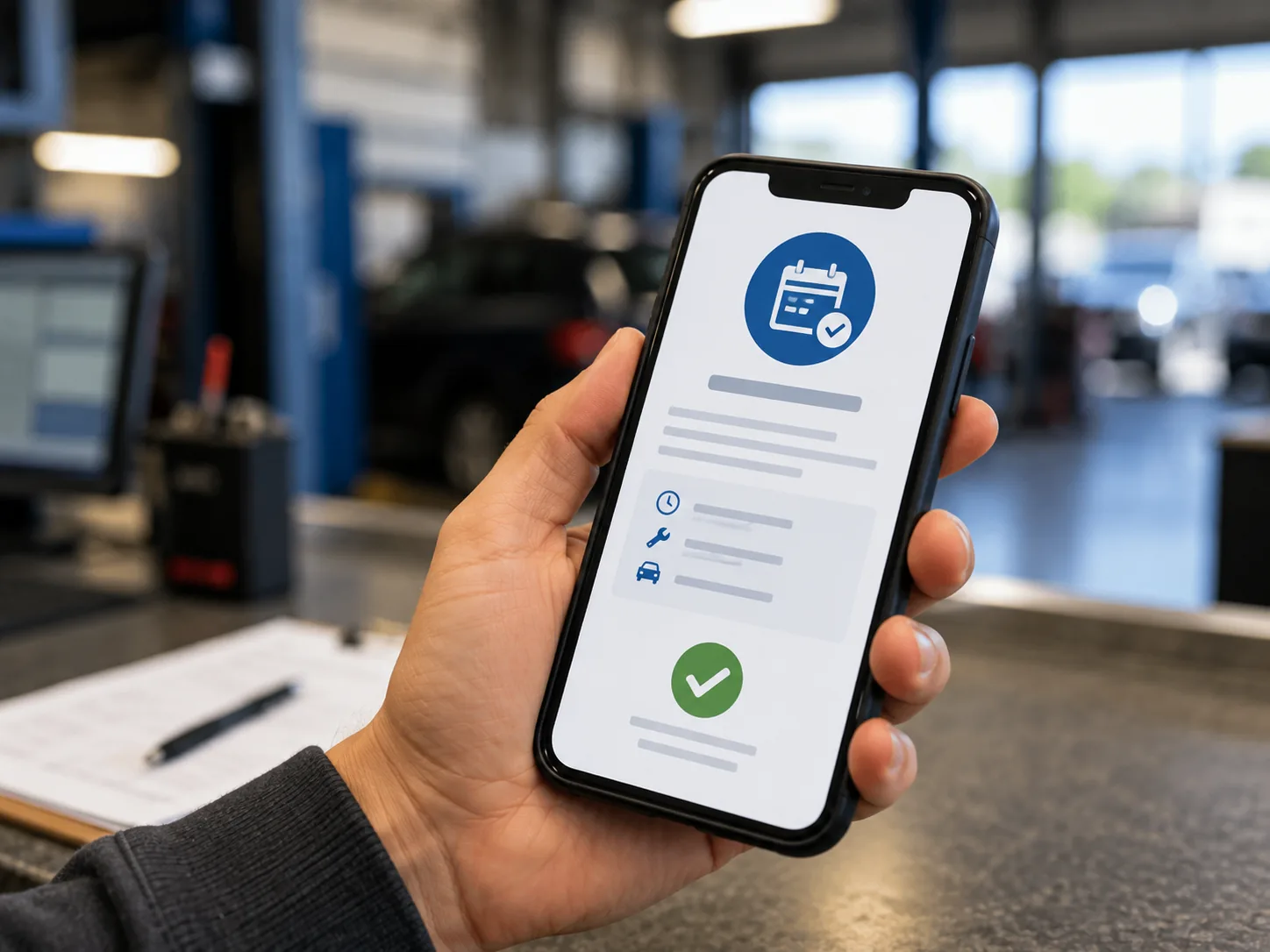
The customer who postponed brakes at 40 percent still needs brakes. The need does not disappear when the car drives off, but the shop's name does. A scheduled text a few weeks later, referencing the specific repair, brings a meaningful share of that work back to the same bays.
- Reminders tied to the specific declined repair
- Maintenance-cycle nudges for oil, tires, and batteries
- Booking confirmations and reminders that cut no-shows
- Slow-season campaigns from the existing customer list
The Customer List Is the Cheapest Marketing a Shop Owns
Every independent shop already holds the asset national chains spend millions to build: a list of local drivers who have paid the shop at least once. Retention marketing works that list on a schedule. Maintenance reminders follow the vehicle's actual mileage and history. Declined-repair follow-ups reference the exact brake reading from the last visit. Seasonal campaigns fill slow weeks with pre-summer AC checks and pre-winter battery tests.
The math favors the list heavily. A reminder text costs nearly nothing and lands on a driver who already trusts the shop. A new customer has to be won from search results full of competitors. New-customer visibility still matters, and the system builds it. The list simply pays first.
How much does auto repair marketing cost?
Ryzoro prices by monthly hours of work, stated up front. Plans start at $750 setup and $149 per month. Veteran-owned shops get 10% off both setup and monthly on any plan.
| Plan | Setup | Monthly | Best for |
|---|---|---|---|
| Starter | $750 | $149 | New shops needing a 5-page site, Google Business Profile, and foundational local SEO |
| Growth | $1,500 | $399 | Shops adding service and city pages, ongoing SEO, 2 blog posts a month, lead tracking |
| Authority | $2,500 | $799 | Established shops adding social media and deeper SEO at 8 hours of work monthly |
| Ultimate | Custom | $1,500 | Fully done-for-you: weekly blogs, full social, priority support, 15 hours monthly |
AI automation is a separate, scoped add-on. Fully custom AI builds start at $7,500 with support plans from $497 per month. Against the leak, the math is short: a handful of recovered declined repairs covers any plan.
Find the Car Count Leak
Family-owned, veteran-owned, 10 years in business. The free growth audit shows which lever lifts car count first.
Why Independent Shops Choose Ryzoro
Automotive marketing platforms bundle websites, ads, and reporting into contracts where the shop owns none of it. Cancel, and the site, the content, and sometimes the review flow leave with the vendor. Ryzoro works the opposite way: everything built belongs to the shop, permanently.
Pricing is the other difference. Plans are sized for independent shops, not franchise groups, and the differentiator is stated plainly as hours of work per month. The founder, Korey Brooks, has been building websites since 1995 and running a digital agency since 2016. Shops sit on a customer list most businesses would pay dearly for, and the cheapest growth usually starts there, not with strangers.
Progress gets measured in qualified calls, texts, form fills, and booked appointments. Rankings and traffic feed those numbers.
"Shops sit on a customer list most businesses would pay dearly for, and then market only to strangers. The declined-repair follow-up is the cheapest car count there is. The customer already trusts the shop and already knows the price."
Serving the Tri-State Area and Beyond
We are local to the Tri-State area and work with auto shops anywhere. Our base in Laughlin, NV is minutes from Bullhead City, AZ and Fort Mohave, AZ. We build for shops in Kingman, AZ, Lake Havasu City, AZ, and Needles, CA as well. Every deliverable is digital and every site we build is yours outright, so distance changes nothing. Out-of-area shops get the same system, the same reporting, and the same no-lock-in terms.
Questions
Auto Repair Marketing FAQs
What marketing works best for an independent auto repair shop?
Google reviews, local search visibility, and follow-up on declined work. Drivers pick shops on trust, and a steady flow of recent reviews is the strongest trust signal available. Automated review requests plus reminders on declined repairs lift car count without any ad spend.
How does an auto repair shop get more Google reviews?
Ask every customer automatically, 24 hours after pickup. That timing catches drivers while the fixed car still feels new. Manual asking fails because service writers forget on busy days, which is exactly when the most customers pass through the shop.
Is a website worth it for a small auto shop?
Yes, because drivers research before they call. A fast site listing services, hours, and a booking option converts searchers the shop already earned through reviews and rankings. Without one, that trust traffic lands on a Facebook page or a directory listing full of competitors.
What is follow-up on declined repairs?
A scheduled reminder to customers who postponed recommended work, like brakes at 40 percent or an aging battery. The need does not disappear when the customer drives off. A text a few weeks later, referencing the specific repair, brings a meaningful share back to the same shop.
How does a shop fill bays in the slow season?
Campaigns to the existing customer list: maintenance reminders, seasonal service offers like pre-summer AC checks, and declined-repair follow-ups. Those messages go to people who already trust the shop, which makes slow-season campaigns cheaper and more reliable than chasing new traffic.
Do maintenance reminders annoy customers?
Not when they are specific and correctly timed. A reminder that references the actual vehicle and the actual recommendation reads as good service, not spam. Generic monthly blasts are what train customers to ignore a shop, and those are worth avoiding entirely.
Does Ryzoro offer a discount for veteran-owned auto shops?
Yes. Veteran-owned businesses get 10% off both setup and monthly fees on any plan, self-attested, no paperwork. Ryzoro is veteran-owned and family-owned itself, so the discount is standing policy.
More Trades We Work With
The same growth system, tuned to each trade's buying moments.
Get Your Free Growth Audit
Ryzoro helps Tri-State small businesses capture more leads, generate more reviews, and automate the busywork. Call or text (702) 509-6367 or email hello@ryzoro.com.
Get Your Free Growth Audit →Call or text (702) 509-6367 · hello@ryzoro.com · Family-owned · Veteran-owned · Veterans save 10%