Marketing for Home Service Businesses: What Each Trade Needs
HVAC, plumbing, roofing, electrical, garage door, pest control, pool, landscaping and auto repair all buy differently. Here is what each trade needs, what it costs with Ryzoro, and where to start.
Family-owned, veteran-owned · 10 years in business · Veterans save 10%

Marketing for home service businesses works when it does three jobs. It gets you found when someone searches, gets the call answered, and turns the finished job into a review. The tactics are much the same in every trade. The order is not, because a dead air conditioner, a postponed brake job and a new roof get bought in very different ways.
Ryzoro has a page for each of nine trades. This page pulls them together. It compares what each trade needs in one table and lists the tactics that book jobs, in the order they pay. It also explains paid leads and Local Services Ads, and shows Ryzoro's own plan prices. Each trade page then goes deeper.
Ryzoro LLC is family-owned, veteran-owned and 10 years in business, based in Laughlin, NV and serving the Tri-State area and beyond. Every plan states its monthly hours of work up front. You own everything we build. No lock-in.
Marketing for Contractors, Compared Trade by Trade
Home services marketing is not one plan with the trade name swapped. Each row below sums up what that trade's own page says: how customers buy, where jobs slip away, and what usually pays first.
| Trade | How customers buy | Where jobs leak | What usually pays first | Busy times |
|---|---|---|---|---|
| HVAC | Fast when a unit dies; replacements are compared across bids | Calls missed in peak season; quotes with no follow-up | Missed-call text-back and quote follow-up | Summer for cooling; tune-ups in spring and fall |
| Plumbing | Emergencies go to whoever answers; repipes and water heaters get quoted | Calls to voicemail mid-job; silent estimates; past customers never reminded | Text-back, then estimate follow-up | Emergencies any time; water heaters age on a known clock |
| Roofing | High-ticket; homeowners collect several estimates | Estimates sent with no follow-up date | Same-day estimates and a 48-hour follow-up | Storm season, with inspection offers before it |
| Electricians | Emergencies go to whoever answers; panel upgrades and EV chargers are researched for weeks | Calls missed while both hands are busy; one generic services page | Text-back before ad spend, then a page per job | Emergencies any time; summer check offers to past customers |
| Garage door | Repairs go to whoever answers first; new doors to whoever looks most legitimate | Repair calls at the phone; door quotes in follow-up; reviews nobody asks for | Answering every call, then reviews and real install photos | Repairs any time; tune-up offers timed to summer heat |
| Pest control | A panic call first; the recurring plan is the real product | One-time treatments that never hear a plan pitch; quiet cancellations | Plan-conversion follow-up and renewal reminders | A spring-to-summer surge that decides the year |
| Pool service | Weekly routes on trust; repairs on speed | Repair calls missed mid-route; repair customers never offered weekly service | Repair follow-up and route offers to the customer list | A long swim season; repairs peak in summer |
| Landscaping | Photos sell, follow-up closes; maintenance is a route | Bids lost in the spring rush; thin photo galleries | Estimate follow-up and project galleries | The spring rush |
| Auto repair | Drivers choose on trust and reviews; repeat visits on a maintenance cycle | Reviews nobody asks for; declined repairs forgotten | Review requests and declined-repair reminders | Steady; slow weeks filled from the customer list |
Two patterns stand out. Emergency trades win on response speed: HVAC, plumbing, electrical and garage door repair. Route and repeat trades win on the customer list they already have: pest control, pool service, landscaping maintenance and auto repair. Most shops run a bit of both, which is why the audit looks at the phone and the list before it looks at ads.

Find Your Biggest Leak First
Family-owned, veteran-owned, 10 years in business. The free growth audit names the leak before any contract gets signed.
Where to Start in Each Trade
The table gives the short version. Here is a little more on each trade, with a link to its full page.
HVAC
HVAC is urgent and seasonal. A homeowner with a dead air conditioner calls the next company on the list within minutes. Peak season floods the phones exactly when crews are busiest, so that is when the most calls get missed. Start with missed-call text-back and quote follow-up. Then build city pages in winter, so they are ranking by next summer. Spring and fall tune-up offers to past customers fill the shoulder months. Read more about HVAC marketing.
Plumbing
Plumbing runs on two clocks. A burst pipe goes to whoever answers first. A repipe or a water heater goes to whoever follows up best. That is why plumbing audits start at the phone: emergency callers do not leave voicemails. Water heaters also age on a known clock, so reminders tied to equipment age turn one repair into a relationship. Read more about plumbing marketing.
Roofing

Roofing is a quote race. A new roof is a high-ticket decision, so homeowners collect several estimates. The roofer who responds first and follows up on schedule has the edge. Roofing audits look hardest at the estimate pipeline, because that is where big jobs quietly die. Same-day estimates, a 48-hour follow-up, real project photos and license details beside every call to action do the most work. Read more about roofing marketing.
Electricians
Electrical work keeps both hands busy, so missed calls cost this trade more than any ranking gap. Emergency work is a speed contest. Panel upgrades and EV charger installs are a trust contest, researched for weeks and compared across quotes. Start with text-back before any ad spend. Then build one page per job type, because homeowners search the specific problem, not "electrician" in general. Read more about electrician marketing.
Garage Door
Garage door repair is a speed contest wrapped around a trust problem. The homeowner with a snapped spring hires whoever answers first. The homeowner comparing new doors hires whoever looks most legitimate, in a trade crowded with anonymous lead sites. A named owner, real install photos and recent local reviews set a local shop apart. Read more about our garage door lead generation service.
Pest Control
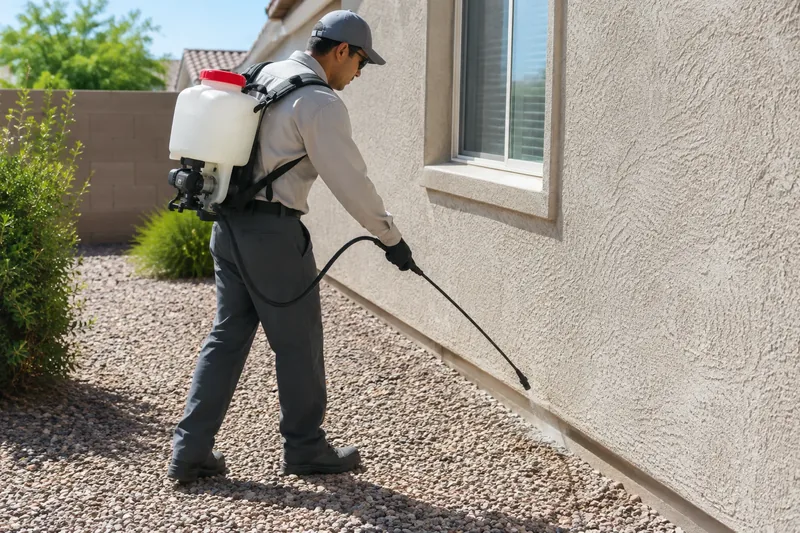
In pest control the product is a recurring route, not a one-time job. The panic call is the front door, and the plan is the business. Pest audits look hardest at plan conversion, because a one-time customer left as one-time is the trade's largest leak. A follow-up after the first treatment, renewal reminders before a plan lapses and a steady flow of reviews do the most work. Read more about pest control marketing.
Pool Service
Pool companies run two engines. Weekly routes are won on trust and territory. Repairs are won on speed, because a dead pump in July is an emergency. Every repair customer is a route prospect who already trusts the company. A weekly-service offer after each repair, plus same-day repair estimates in peak season, grows both engines at once. Read more about pool service marketing.
Landscaping
Landscaping sells with pictures and closes with follow-up. Homeowners choose the yard they can see, so a thin gallery loses bids before the first call. Installs are a quote race, and maintenance is a route. The spring rush is when follow-up collapses, which makes estimate automation and project galleries the first fixes. Read more about landscaping marketing.
Auto Repair
Auto repair comes down to car count, and drivers choose a shop on trust. Recent Google reviews, a clear website and local visibility build that trust. Shops also have an edge most trades lack: repeat customers on a maintenance cycle. Review requests after every pickup and reminders on declined repairs usually pay first, because the customer list already exists. Read more about auto repair shop marketing.
How to Market a Home Service Business: 9 Tactics in Order
These are the home services marketing tactics every trade above shares. Do them roughly in this order. Each one makes the next one pay better, and the first few cost the least.
1. A Google Business Profile That Is Complete and Active
Your Google Business Profile is the listing that shows on Google Maps and in the map results. Google says complete, active business profiles help local results, so fill in every field: the right category, hours, service area, photos and services. Then keep it active with weekly posts and replies to every review. It is a free listing, and for many homeowners it is the first look at your company. See Google Business Profile management.
2. A Fast, Mobile-First Website With a Page per Service and Town

One generic services page cannot rank for the dozen specific jobs people search. A plumber needs separate pages for drain cleaning and water heater replacement. An electrician needs separate pages for panel upgrades and EV chargers. Each town served deserves its own page too. On every page, keep the phone number one tap away and put license and insurance proof beside the call to action. See web design.
3. Local SEO for the Searches That Buy
Local SEO points those pages at real searches, like "AC repair" or "garage door repair" with a town attached. It builds over months, not days. Map pack visibility and city page rankings improve as reviews, content and listings add up. That is why the work starts early, before the busy season it is meant to win. See local SEO services.
4. Instant Follow-Up on Every Missed Call
A homeowner with an emergency rarely leaves a voicemail. They call the next listing. An automatic text that goes out seconds after a missed call holds that customer until someone can call back. A 24-hour email and a 72-hour nudge cover the ones who still have not booked. This is usually the cheapest fix in any trade, and it works from the day it goes live. Read the real cost of a missed call and why speed to lead matters.
5. Quotes That Follow Up on Themselves
Big tickets are slow decisions. A homeowner comparing three bids rarely calls back the silent one. Send templated quotes as a clean PDF the same day, with e-signature built in. An automatic check-in 48 hours later keeps every open quote alive. Every open estimate then sits in one place instead of on a clipboard.

6. Reviews Asked For After Every Job
Finished jobs rarely turn into reviews unless someone asks. An automatic Google review request sent 24 hours after the job catches them while they are still pleased. A steady flow of recent reviews helps map pack placement and gives the next homeowner proof from their own neighbors. See the 5-Star Review System and how to get more Google reviews.
7. Campaigns to the Customer List
The cheapest new job often comes from an old customer. Every trade has its own version:
- HVAC: tune-up offers before summer and winter
- Plumbing: water heater checks timed to equipment age
- Roofing: inspection offers before storm season
- Pest control: plan offers after a one-time treatment, and renewal reminders
- Pool service: a weekly-service offer after every repair
- Landscaping: recurring-care offers to install customers
- Auto repair: reminders on declined repairs and maintenance
A reminder text lands on someone who already trusts you. A new customer has to be won from a page full of competitors.
8. Weekly Posts That Show Real Work

Finished jobs are the best content a home service business has. Before-and-after photos of a new roof, a clean pool or a finished yard reassure people comparing quotes. Weekly posts to your Google Business Profile and Facebook keep the company visibly active without pulling anyone off a job. See social media management.
9. Track Calls, Not Just Clicks
The number that matters is qualified calls, texts and form fills, and the jobs they turn into. Rankings and traffic feed that number, but they never replace it. Count it every month, by source, so you know which tactic is paying. Read how to know if your marketing is working.
A Year of Home Services Marketing, Season by Season
Most trades on this page have a busy season, and the shops that win it prepare in the quiet months. The trade pages share one calendar:
| Season | What to do | Trades it fits most |
|---|---|---|
| Late winter | Build service and city pages and grow reviews, so they rank before demand climbs | HVAC, pest control, pool service, landscaping |
| Spring | Send offers to past customers before the rush: tune-ups, inspections, barrier treatments, start-ups | HVAC, roofing, pest control, pool service |
| Summer | Capture season: answer fast, text back every missed call, send estimates the same day | HVAC, pool service, pest control |
| Fall | Tune-ups, renewals and maintenance offers that keep the customer list active | HVAC, pest control, pool service, landscaping |
Busy months are exactly when marketing gets forgotten. That is why the calendar runs on automation set up in advance, not on memory. Read why marketing should not stop when you get busy and how to fix a slow season.
Home Service Leads: Rent Them or Own Them
There are two ways to get home service leads. You can rent them, paying a seller for each call or lead. Or you can own them, through your own website, Google Business Profile and reviews. Rented leads come in three common forms:
- Pay per call: a fee for each phone call that meets the seller's rules.
- Exclusive leads: a fee for each lead, sold to your company only.
- Shared leads: a fee for each lead, sold to several companies at once, so the fastest reply usually wins.
Rented leads stop the day the payments stop. A website, a profile and a review base keep working after the work is paid for, and every call they bring is yours alone. Paid leads still have a place: filling a slow month, testing a new town, or covering a service your pages do not rank for yet. Before you buy, ask in writing how many companies get each lead and what counts as a billable call. Our garage door page compares every lead source side by side in one table.
Local Services Ads: An Option You Can Run Yourself
Local Services Ads are Google's own pay-per-lead ads for local service businesses. Google says you pay for valid leads, such as a call you answer, a text or a voicemail, not for clicks. Which trades can run them, and what screening comes first, depends on the category. Google's Local Services Ads guide lists the categories and the requirements. Check your trade there before you plan around it.
You can sign up and run Local Services Ads yourself. They sit next to the owned side, not in place of it. A homeowner who sees your ad can still check your website and your reviews before calling, so those keep paying either way.
How Much Should a Home Service Business Spend on Marketing?
Start from your own numbers, not someone else's percentage. Rules of thumb rarely fit a two-truck shop. These four steps give you a budget you can defend:
- Count the leak. How many calls went unanswered last month, and how many quotes never got a follow-up?
- Price one job. Work out what an average job is worth to you after costs.
- Track cost per booked job. Divide what you spent on marketing by the jobs it booked. Do it every month, by source.
- Fix the cheapest leak first. Follow-up and reviews usually cost less than more traffic, so do them before you pay for more visitors.

Ryzoro's Plan Prices
Ryzoro prices by monthly hours of work, stated up front. These are our own plans:
| Plan | Setup | Monthly | Pages | Work each month | Fits |
|---|---|---|---|---|---|
| Starter | $750 | $149 | Up to 5 | About 1.5 hours | A new shop that needs a site, a Google Business Profile and foundational local SEO |
| Growth | $1,500 | $399 | Up to 12 | About 4 hours | A company adding service and city pages, ongoing SEO and 2 blog posts a month |
| Authority | $2,500 | $799 | Up to 20 | About 8 hours | An established company adding social media and deeper SEO, with 2 blog posts a month |
| Ultimate | Custom | $1,500 | Up to 20 | About 15 hours | Fully done for you: weekly blog posts and full social |
Extra pages start at $100 each. Google Business Profile management on its own is $299 setup plus $99 a month. Business automation, such as missed-call text-back or quote follow-up, is a separate add-on, scoped to the leak it fixes. Veteran-owned businesses get 10% off both setup and monthly on any plan, self-attested.
The right plan depends less on your trade than on your leak. A shop losing calls to voicemail needs follow-up before it needs more pages. A shop with a thin website needs pages before it needs ads.
Five Mistakes That Waste a Marketing Budget
- Buying traffic before fixing follow-up. More calls into a phone that goes to voicemail only means more lost jobs.
- One page for every service. A single services page cannot match the specific jobs people search.
- Renting what you should own. A website, content or review base held by a platform is gone when the contract ends.
- Measuring clicks instead of calls. Traffic that never turns into calls, texts or form fills is not a result.
- Quitting local SEO after a month. It builds over months, so judge it on a longer clock than follow-up automation.
Questions to Ask Any Marketing Company Before You Sign

- Who owns the website, the content and the Google Business Profile if I leave?
- How many hours of work do I get each month?
- Is there a contract term, and what happens if I cancel?
- What will you measure: calls and jobs, or only rankings?
- Can I see the price before the sales call?
Our answers are short. You own everything we build, and every plan states its monthly hours. There is no lock-in. Progress is measured in qualified calls, texts and form fills, and the prices are on this page. For more, read how to choose a web design company.
How Long Until Marketing Brings Calls?
It depends on the tactic. Missed-call text-back and quote follow-up start working the day they go live, because they act on calls and quotes you already have. Review requests start with the next finished job. Website pages get built in weeks, not quarters. Local SEO is the slow one: map pack visibility and city page rankings build over months as reviews, content and listings add up.
That is why the order above matters. The fast fixes recover jobs you are already losing while the slower work builds.
"Every trade on this page buys a little differently, but the leaks look the same. A missed call, a quote nobody followed up, a happy customer nobody asked for a review. Fix those first, then pay for more traffic."
Why Home Service Owners Work With Ryzoro
Plans are priced for small businesses, and each one states its hours of work per month, so you know what you are paying for. Business automation gets added only where a real leak justifies it, never bundled by default. The website, the content, the rankings and the review base all belong to you. No lock-in.
Korey Brooks, our co-owner, has been building websites since 1995 and running a digital agency since 2016. Ryzoro is family-owned and veteran-owned, which is why the veteran discount is a standing policy.
Serving the Tri-State Area and Beyond
We are based in Laughlin, NV and local to the Tri-State. We have pages for Bullhead City, AZ, Fort Mohave, AZ, Kingman, AZ, Lake Havasu City, AZ and Needles, CA. We work with home service companies anywhere, because every deliverable is digital and every site we build is yours outright.

Questions
Home Services Marketing FAQs
What is home services marketing?
It is everything that gets a homeowner to call your company instead of the next one. That means being found on Google, looking trustworthy when they land, answering fast and following up. Unlike selling a product, the customer is choosing a person who will come to their house, so trust and speed decide most jobs.
How much should a home service business spend on marketing?
Start from your own numbers: count the missed calls and cold quotes, price an average job, and track cost per booked job each month. Ryzoro's plans run from $750 setup and $149 a month (Starter) to $1,500 a month (Ultimate), with each plan's hours of work stated up front.
How long does it take to see results?
Follow-up automation works from the day it goes live, because it acts on calls you already get. Local SEO builds over months as reviews, content and listings add up. Doing the fast fixes first means you recover jobs while the slower work builds.
Should I buy leads or build my own?
Bought leads stop when the payments stop, and shared leads go to several companies at once. Leads from your own website, profile and reviews are yours alone and keep coming after the work is paid for. Use paid leads to fill a short gap, not as the foundation.
Do I need a separate page for each service and town?
Usually, yes. Homeowners search for the specific job with their town attached, and one general page cannot match all of those searches. A page per core service and per town served gives Google a clear match and gives the visitor an exact answer.
Does Ryzoro work with trades not listed here?
Yes. The nine trades on this page have their own pages, but the same system fits most local service businesses. The free growth audit shows where your business is losing jobs and whether a plan fits.
Does Ryzoro offer a veteran discount?
Yes. Veteran-owned businesses get 10% off both setup and monthly fees on any plan, self-attested, no paperwork. Ryzoro is veteran-owned and family-owned itself.
Every Trade We Work With
The same growth system, tuned to each trade's buying moments.
Get Your Free Growth Audit
Ryzoro helps Tri-State small businesses capture more leads, generate more reviews, and automate the busywork. Call or text (702) 509-6367 or email hello@ryzoro.com.
Get Your Free Growth Audit →Call or text (702) 509-6367 · hello@ryzoro.com · Family-owned · Veteran-owned · Veterans save 10%